When to Use Deck Stripper Instead of Deck Cleaner
Not every deck needs to be stripped.
But not every deck can be cleaned and stained either.
That’s where contractors run into problems.
A deck may look like it only needs a good wash, but if there is old stain, sealer, uneven coating, or buildup blocking the wood, cleaner alone will not get the surface ready for new stain.
Understanding when to use a deck cleaner versus a deck stripper is one of the most important parts of professional deck prep.
It affects how the stain absorbs, how the final color looks, and how long the job holds up.
Deck Cleaner and Deck Stripper Are Not the Same
Deck cleaner and deck stripper serve two different purposes.
A deck cleaner is used when the wood needs to be cleaned, refreshed, and prepared for staining.
It helps remove:
dirt
mildew
algae
organic buildup
surface grime
Cleaner is the right choice when the deck is mostly bare wood or has weathered naturally without a heavy coating still sitting on the surface.
A deck stripper is used when there is an existing stain, sealer, or coating that needs to be removed before the deck can be refinished.
That is the key difference.
Cleaner removes contamination.
Stripper removes old finish.
When Deck Cleaner Is Enough
Deck cleaner can be the right choice when the deck is dirty, gray, or weathered, but not coated with a product that blocks absorption.
This usually applies to decks that have:
natural graying
mildew or algae growth
dirt and organic buildup
no visible old stain layer
no water-repelling sealer left on the surface
In these situations, cleaning followed by brightening may be enough to prepare the wood for stain.
But contractors need to evaluate the surface before assuming cleaner will do the job.
If there is old product still on the wood, cleaning alone may not be enough.
When You Need Deck Stripper
Deck stripper should be used when an old stain, sealer, or coating is still present on the surface.
Signs a deck may need stripping include:
uneven old stain color
shiny or sealed areas
water beading on the boards
peeling or patchy coating
blotchy previous stain
areas where new stain will not absorb
heavy buildup from past applications
This is especially common on decks that have been stained multiple times over the years.
The surface may look worn, but old product can still be sitting in the wood or on top of it.
If that old coating is not removed, the new stain cannot penetrate evenly.
Why Old Coatings Cause Problems
Deck stain needs access to the wood.
When old stain or sealer is left behind, it blocks absorption.
That leads to problems like:
blotchy color
uneven penetration
poor adhesion
premature fading
early failure
inconsistent finish across the deck
This is one of the biggest reasons stain jobs do not last.
The issue is not always the new stain.
A lot of the time, the problem is that the wood was never properly opened up and prepared.
Your existing Deck and Wood Stain content already emphasizes that prep determines performance, especially when old coatings block new stain from absorbing properly.
How Stripper Plus Fits Into the Process
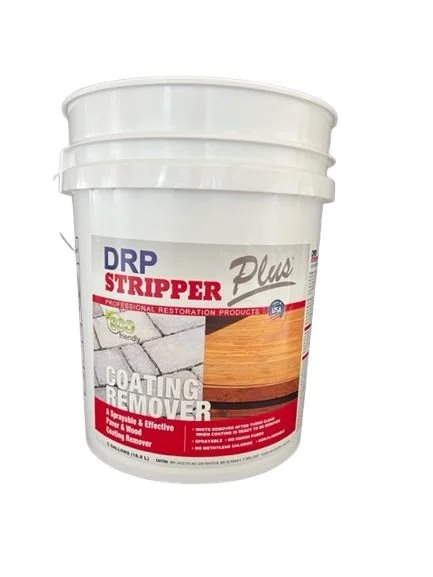
When old stain or sealer needs to be removed, Stripper Plus is the product built for that part of the job.
It is used before brightening and staining to help remove old coatings that are preventing the wood from accepting new stain properly.
For contractors, this matters because it creates a cleaner starting point.
Instead of trying to force new stain over old product, Stripper Plus helps prepare the surface so the rest of the system can work the way it should.
A proper process may look like this:
evaluate the deck
determine if cleaning or stripping is needed
use Stripper Plus when old coating is present
rinse thoroughly
brighten the wood
allow proper dry time
apply stain
The goal is not to use stripper on every deck.
The goal is to use it when the deck actually needs it.
Why Stripping Should Be Followed by Brightening
After stripping, the wood should be brightened before staining.
Brightening helps balance the surface, restore a more natural tone, and prepare the wood for more even stain absorption.
Skipping this step can affect the final result.
Even after old stain is removed, the wood still needs to be properly neutralized and prepared before stain is applied.
That is why better contractors think in terms of a full prep system, not just one product.
Cleaner, stripper, brightener, and stain each have a role.
The Right Prep Product Saves Time Later
Using cleaner when a deck actually needs stripper may seem faster at first.
But it often creates problems later.
If the stain does not absorb evenly, the contractor may have to deal with:
callbacks
unhappy customers
uneven finishes
extra labor
wasted product
reputation issues
Choosing the right prep product upfront helps avoid those problems.
It also makes the job more predictable.
That is what contractors need: a process they can repeat from job to job with consistent results.
The Bottom Line
Deck cleaner and deck stripper are not interchangeable.
Cleaner is for dirt, mildew, algae, and surface contamination.
Stripper is for old stain, sealer, and coatings that block new stain from absorbing into the wood.
If a deck still has old product on the surface, cleaning alone will not properly prepare it for refinishing.
That is when Stripper Plus becomes an important part of the deck restoration process.
If you want better stain absorption, more consistent finishes, and fewer issues in the field, start with the right prep product for the condition of the deck.
Use Stripper Plus when old stain or sealer needs to be removed, then follow with the proper brightener and stain system for professional results.