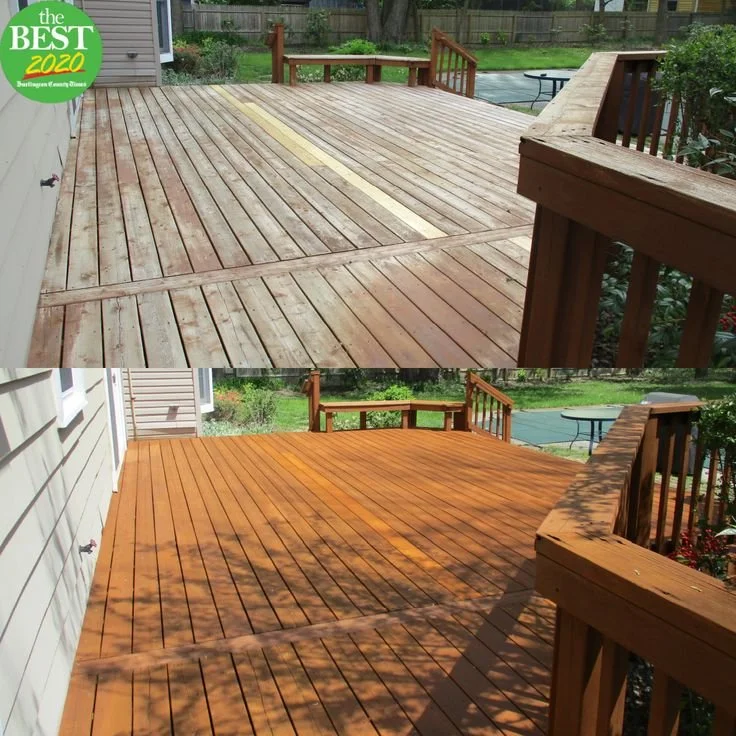
Common Deck Staining Mistakes Contractors Make
Most deck staining issues don’t come from the stain itself.
They come from mistakes made earlier in the process.
And the problem is—many of these mistakes aren’t obvious until the job is finished.
At that point, fixing them costs time, money, and credibility.
Rushing the Prep Work
This is the most common issue.
Contractors move too quickly through cleaning or skip steps entirely to save time.
But prep is what determines how the stain performs.
When prep is rushed:
contaminants stay in the wood
stain doesn’t absorb evenly
the finish looks inconsistent
It might look acceptable at first—but it won’t hold up.
Not Removing Old Coatings Properly
Applying new stain over an existing coating without stripping is a major problem.
Old stain or sealer blocks absorption.
That leads to:
blotchy finishes
uneven penetration
premature failure
If the wood isn’t properly stripped, the new stain can’t do its job.
Skipping the Brightening Step
A lot of contractors clean or strip—but stop there.
Skipping brightening leaves the wood unbalanced.
That shows up as:
uneven color
inconsistent absorption
a dull or washed-out finish
Brightening resets the surface and allows stain to apply evenly across the entire deck.
Staining Too Soon After Cleaning
Timing gets overlooked more than it should.
If the wood hasn’t fully dried, moisture gets trapped under the stain.
That can cause:
poor penetration
early failure
uneven appearance
Letting the deck dry properly is just as important as the prep itself.
Using Inconsistent Products
Switching between different cleaners, stains, or prep products creates unpredictable results.
What works on one job might not work the same on the next.
Contractors who see the most consistent outcomes use a system:
cleaner
stripper
brightener
stain
Everything is designed to work together.
Treating Every Deck the Same
Not every deck needs the same approach.
Some require stripping.
Others only need cleaning and brightening.
Applying the same method to every job leads to either:
unnecessary work
or incomplete prep
Both affect the final result.
Where These Mistakes Show Up
The impact isn’t always immediate.
It shows up later as:
stain fading too quickly
uneven wear patterns
callbacks that cut into profit
By then, the issue isn’t easy to fix.
What Separates Better Results
Contractors who avoid these problems don’t rely on shortcuts.
They follow a consistent process and use products that are designed to work together.
That leads to:
more predictable finishes
longer-lasting results
fewer issues after the job is done
The Takeaway
Most deck staining mistakes are preventable.
They come from skipping steps, rushing the process, or using inconsistent products.
Fixing those issues doesn’t require doing more—it requires doing the process correctly from the start.
If you want to avoid costly mistakes and get consistent results on every job, use a complete product system that’s built for deck restoration. Shop our deck stains, cleaners, strippers, and brighteners and run more efficient jobs this season.