When Should You Strip Old Deck Stain Before Restaining?
Restaining a deck is not always as simple as cleaning the surface and applying a new coat. In many cases, the most important decision happens before the stain is ever opened: should the old finish be stripped first?
For contractors, this decision affects the entire job. It impacts prep time, product selection, final appearance, stain performance, and the likelihood of callbacks. For homeowners, it can be the difference between a deck that looks professionally restored and one that starts peeling, blotching, or failing too soon.
Old deck stain does not always need to be stripped. But when the existing coating is failing, incompatible, built up, or blocking absorption, stripping is often the right move before restaining.
Why Stripping Matters Before Restaining
Deck stain performs best when it is applied to a clean, sound, properly prepared wood surface. If the existing coating is still sitting on top of the wood, peeling away, or preventing the new stain from bonding or penetrating, the new finish is at risk from the start.
A new stain job is only as stable as the surface underneath it.
If the old coating fails, the new coating can fail with it. That is why stripping is such an important part of exterior wood restoration. It removes the old finish so the wood can be prepared for a new stain system.
For contractors, stripping can also help create a more consistent finished appearance, especially when old stain remains in some areas but has worn away in others.
Strip the Deck if the Old Stain Is Peeling
Peeling stain is one of the clearest signs that stripping may be needed.
When stain peels, flakes, or lifts from the surface, it means the existing coating is no longer bonded properly. Applying new stain over peeling material will not fix the problem. It may temporarily cover the surface, but the weak layer underneath can continue to release.
This is especially common with film-forming coatings and solid stains that sit more heavily on the surface.
Before restaining, the loose and failing material needs to be removed. A deck stripper can help break down the old finish so the surface can be cleaned, rinsed, and prepared for refinishing.
Strip the Deck if the Finish Is Built Up
Some decks have years of stain, sealer, or coating layered on top of each other. Each time another coat is added without proper prep, the surface becomes less predictable.
Built-up coatings can create a thick, uneven film that blocks absorption and makes the deck look patchy. Some areas may look shiny or dark. Others may peel or feel sticky. High-traffic areas may be worn down to bare wood while protected areas still hold multiple layers of old finish.
When the coating is built up, cleaning alone usually is not enough. The old material needs to be removed before the deck can be properly refinished.
Strip the Deck When Changing Stain Types
Stripping is often necessary when changing from one stain type to another.
For example, switching from a solid stain to a semi-transparent stain requires more than a simple wash. Solid stains hide the wood grain and leave pigment on or near the surface. If that old solid stain remains, the new semi-transparent stain will not show the wood evenly.
The same issue can happen when switching between incompatible products. Oil-based and water-based products may not always work well over each other depending on the existing coating and surface condition.
When changing stain types, contractors should evaluate whether the old coating needs to be stripped to avoid bonding problems, color issues, or uneven absorption.
Strip the Deck if Water Still Beads Unevenly
A water test can reveal a lot about an old deck finish.
If water soaks into some areas but beads in others, the surface is not accepting moisture evenly. That often means old stain or sealer is still present in certain sections. If water cannot penetrate evenly, stain may not penetrate evenly either.
This can lead to blotchy color and inconsistent protection.
Before restaining, the surface should be prepared so the new stain can perform consistently across the deck boards, stairs, and railings.
Strip the Deck if the Color Is Uneven From Old Coating
Old stain can leave behind uneven color, especially on decks that have worn differently across the surface. Sun-exposed boards may be gray and bare, while shaded areas may still hold dark stain. Furniture marks, grill areas, planters, and railings can all create protected spots where the old coating remains.
If this uneven coating is not removed, the new stain may highlight the problem instead of hiding it.
Stripping helps reduce leftover coating and gives the refinishing process a cleaner starting point.
Strip Solid and Film-Forming Stains Before Refinishing
Solid stains and film-forming coatings are some of the most common reasons contractors need a stronger stripping process.
These coatings can be difficult to remove because they are designed to provide heavier coverage. When they begin failing, they may peel in some areas while remaining bonded in others. That creates a challenging surface for restaining.
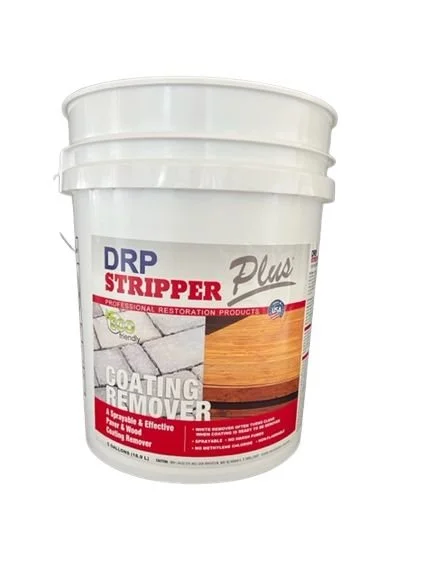
Deck Restoration Plus Stripper Plus is designed for tough exterior wood coating removal, including solid and film-forming stains, sealers, and coatings. It can be used as part of the prep process on decks, fences, log homes, wood siding, and other exterior wood surfaces where old finish needs to be removed before restoration.
For contractors, a product like Stripper Plus is useful when standard cleaning is not enough and the coating needs to be broken down before refinishing.
Cleaning vs. Stripping: Know the Difference
Cleaning and stripping are not the same step.
Cleaning removes dirt, mildew, algae, pollen, and surface contamination. Stripping removes old stain, sealer, or coating.
A deck can be dirty without needing stripping. A deck can also look relatively clean but still need stripping because the old coating is blocking absorption or failing underneath.
The right prep process depends on what is on the wood.
If the surface is bare but dirty, cleaning may be enough. If the surface has old coating, peeling stain, solid stain, or uneven finish, stripping may be needed before cleaning, sanding, brightening, and staining.
Sanding May Still Be Needed After Stripping
Stripping is a major prep step, but it does not always eliminate the need for sanding.
After old coating is removed, the wood may still have raised grain, rough areas, stubborn finish residue, or uneven spots. Sanding can help smooth the surface and improve the final appearance.
This is especially important on deck floors, handrails, benches, and stair treads where the homeowner will see and feel the finished surface.
For contractors, sanding after stripping can help take the job from acceptable to professional-grade.
Why Contractors Should Not Skip Stripping When It Is Needed
Skipping the stripping step may save time at the beginning of the job, but it can create bigger problems later.
If new stain is applied over a failing or incompatible coating, the finished project may peel, discolor, or wear unevenly. That can lead to customer complaints and expensive callbacks.
Proper stripping helps protect the job by creating a more stable surface for the new stain system.
It also gives contractors a stronger explanation for the value of professional prep. Customers may not understand why stripping is needed at first, but they usually understand the risk of paying for a stain job that does not last.
Build Better Restaining Results With Better Prep
Old stain should be stripped before restaining when it is peeling, built up, incompatible, uneven, blocking absorption, or forming a failing coating on the surface.
Not every deck needs stripping. But when old finish is the reason the new stain cannot properly bond or penetrate, stripping is one of the most important steps in the restoration process.
Deck and Wood Stain provides exterior wood care products, stains, strippers, and restoration guidance for contractors and homeowners who want better results on decks, fences, siding, log homes, and other outdoor wood surfaces.
For tough coating removal before refinishing, Deck Restoration Plus Stripper Plus can help prepare exterior wood for a cleaner, more reliable staining project.